
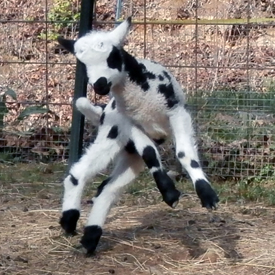
REGISTERED JACOB SHEEP SINCE 1995
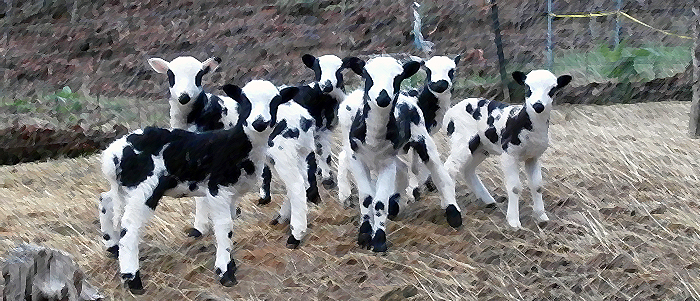
2025 Lambs are here..
Check out the updates on our lamb page - updated 7/12
Patchwork Farm is located in the northeast
Georgia Mountains, approximately equidistant from
Asheville, North Carolina, Greenville, South Carolina and
Atlanta, Georgia.
Dave & Linda Bjarkman - - Tiger, Georgia - 706-782-7578
We began our Jacob Sheep adventure
in 1994, joined JSBA in 1995 and began to build a registered
flock to be proud of. We've gathered sheep from all across
the country - New York to California and points between during
the last 30 years. And we've sent sheep to New York and California
and points between.
Here at Patchwork, we believe
strongly in preserving the diversity of the primitive American
Jacob Sheep. I strive for a diverse flock - both genetically
and visually, while still staying within the standards of
JSBA.
I believe that the primitive Jacob Sheep is a hardy sheep
and hardiness, easy lambing, and mothering skills to be of
prime importance when selecting sheep. I have chosen to continue with the traditional deer like old style Jacob Sheep.
Selection criteria at Patchwork leans strongly towards excellent
hand spinning fleeces and outstanding horns. I select ewes
with strong, well placed horns, including strong laterals, on a feminine head and only use rams from a maternal
line of four strong horns. Flock members are chosen and retained
with an eye to both their ancestors and their descendants.
I believe strongly in the benefit of a conservation minded organization like JSBA and encourage you to check out www.jsba.org
Member Jacob
Sheep Breeders Association since 1995 Flock #2895
| WEB DESIGN |